

9.5 Ceramic Tile
Description
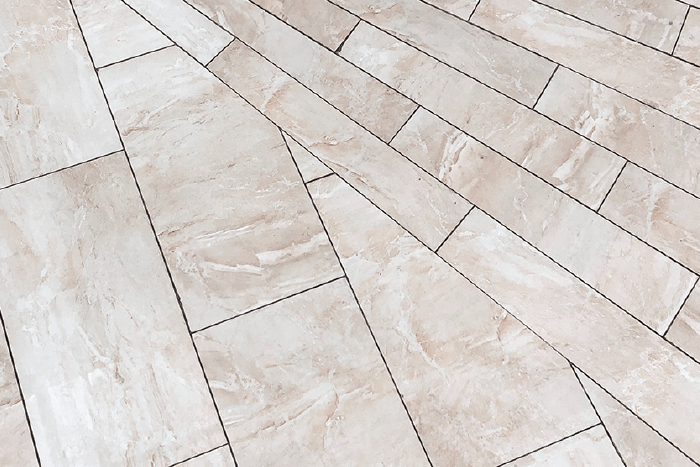
Ceramic tile is a versatile flooring option known for its durability, elegance, and wide range of design possibilities. Made from natural clay and other minerals, ceramic tiles are fired at high temperatures to create hard, dense surfaces that can withstand heavy foot traffic, moisture, and wear; however, they will chip or crack under irregular pressure or from impact. Tiles are commonly attached to a substrate using mortar. The lines between tiles are commonly filled with grout. Mortar and grout are highly porous and draw in moisture. It is highly recommended that grout is sealed to prevent permanent staining from oil and colourants.Warranty Period
All new flooring receives 1-year warranty coverage for installation issues from the installer from the initial date of occupancy of the building. Any defects in products purchased by WUD directly from the manufacturer, rather than through the installer, must be handled between WUD and the manufacturer. The installer provides no warranty on manufacturer defects.
When a building is sold, the WUD-supplied warranty coverage period will be as described in the contract between WUD and the buyer.
Potentially Warrantable Issues
- Defects in tile surface
- Damage reported on or before completion for common areas*
- Damage reported on or before initial occupancy for residential units*
- Unlevel ceramic tiles (ridges or depressions)
- Ceramic tiles installed at different elevations (RCPG 12.40)
- Exposed edge or gaps visible at baseboard, door frame/casing, or wall
- Cut edge of ceramic tile rough or sharp (RCPG 12.37)
- Tile is loose
- Grout colour, width, height, smoothness inconsistent** (RCPG 12.42, 12.43)
- Grout cracked between ceramic tiles (RCPG 12.44)
- Floor is out of level (RCPG 2.7)
* Cracks in ceramic tile caused by settlement or pressure may be covered under warranty, provided impact damage is not evident. In-Person review is required to determine warrantability.** Slight grout colour, width, and texture variations are acceptable, provided they conform with the Residential Construction Performance Guide Guidelines. Readily noticeable imperfections must be reviewed on a case-by-case basis to determine warrantability.Non-Warrantable Issues
- Discolouration* (RCPG 12.16, 12.17)
- Dye-lot and pattern variations (RCPG 12.18, 12.19)
- Damage reported after completion for common areas
- Damage reported after initial occupancy for residential units
* It is highly unlikely ceramic tiles will become discoloured unless they are exposed to direct heat, chemicals, pet urine and other spillages, or direct sunlight. Such discolouration is not warrantable. Claims of discolouration due to defect will be reviewed on a case-by-case basis and considered for warranty coverage.Prevention and Maintenance
- Never use coloured and/or harsh chemicals on ceramic tile. Follow manufacturer recommendations for chemically cleaning or treating ceramic tile.
- Never use abrasive or sharp tools to remove debris for ceramic tile. For stuck-on messes, apply lightly damp cloth to surface to allow mess to soften and then wipe up. Do not oversaturate ceramic tile, especially at edges, as water penetration through grout or discolouration of grout may occur.
- Avoid applying hot water or heated cloths directly to ceramic tile as discolouration and/or damage to tile may occur.
- Remove loose debris from ceramic tile regularly using brooms or vacuum to protect tile surface.
- Clean spills immediately to avoid permanent discolouration and setting of odours into grout.
- Grout is extremely porous and may attract moisture and stains. Periodically seal grout to reduce potential of stains setting into grout.
Resources
- Residential Construction Performance Guide, Section 2.7
- Residential Construction Performance Guide, Section 12.16
- Residential Construction Performance Guide, Section 12.17
- Residential Construction Performance Guide, Section 12.18
- Residential Construction Performance Guide, Section 12.19
- Residential Construction Performance Guide, Section 12.37
- Residential Construction Performance Guide, Section 12.40
- Residential Construction Performance Guide, Section 12.42
- Residential Construction Performance Guide, Section 12.43
- Residential Construction Performance Guide, Section 12.44