

9.4 Flooring: Luxury Vinyl Tile (LVT)
Description
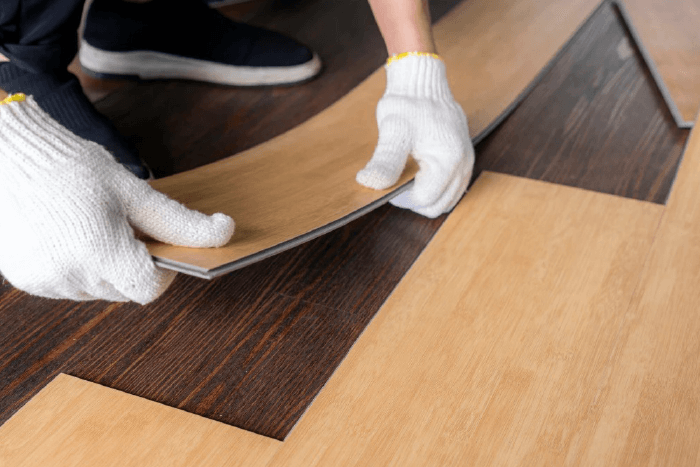
Luxury Vinyl Tile or LVT is a durable and resilient flooring product that mimics the look of flooring material such as hardwood, stone, or even ceramic tile. It is composed of backing, a core layer, a printed layer, and a wear layer for protection. Some LVT is designed to be installed without adhesive in the main traffic areas, where other are adhered to the entire subfloor. In the event of damage, a single tile can be removed and replaced with relative ease.Warranty Period
All new flooring receives 1-year warranty coverage for installation issues from the installer from the initial date of occupancy of the building. Any defects in products purchased by WUD directly from the manufacturer, rather than through the installer, must be handled between WUD and the manufacturer. The installer provides no warranty on manufacturer defects.
When a building is sold, the WUD-supplied warranty coverage period will be as described in the contract between WUD and the buyer.
Potentially Warrantable Issues
- Bubbles on surface of vinyl tile (RCPG 12.14)
- Damage reported on or before completion for common areas
- Damage reported on or before initial occupancy for residential units
- Unlevel vinyl tiles (ridges or depressions)
- Gaps between vinyl tiles (RCPG 12.13)
- Exposed edge visible at baseboard or wall
- Bumps from debris beneath vinyl tile (RCPG 12.11)
- Delamination from subfloor
- Excessive depression of vinyl tile when walked upon
- Floor is out of level* (RCPG 2.7)
* Wood-framed subfloors may not be perfectly level due to shrinkage of materials, settlement, or initial construction. This is not typically warrantable unless the floor is out of level my more that 1” over a continuous 10’ span.Non-Warrantable Issues
- Discolouration* (RCPG 12.16, 12.17)
- Dye-lot and pattern variations (RCPG 12.18, 12.19)
- Damage reported after completion for common areas
- Damage reported after initial occupancy for residential units
* It is highly unlikely LVT tiles will become discoloured unless they are exposed to chemicals, pet urine and other spillages, or direct sunlight. Such discolouration is not warrantable. Claims of discolouration due to defect will be reviewed on a case-by-case basis and considered for warranty coverage.Prevention and Maintenance
- Never use bleach, hot water, coloured chemicals, and/or harsh chemicals on vinyl tile. Follow manufacturer recommendations for chemically cleaning or treating vinyl tile.
- Never use abrasive or sharp tools to remove debris for vinyl tile. For stuck-on messes, apply lightly damp cloth to surface to allow mess to soften and then wipe up. Do not oversaturate vinyl tile, especially at edges, as delamination of adhesive may occur.
- Avoid applying hot water or heated cloths directly to vinyl tile as discolouration and/or delamination of adhesive may occur.
- Remove loose debris from vinyl tile regularly using brooms or vacuum to protect vinyl tile surface.
- Clean spills immediately to avoid permanent discolouration and setting of odours into vinyl tile.
- Should a sharp instrument cause a cut or gouge through the vinyl tile to the subfloor, force a small amount of clear or colour-matched caulking into the damage to seal the tile from the subfloor. This will prevent spills potential moisture damage to subfloor.
Resources
- Residential Construction Performance Guide, Section 2.7
- Residential Construction Performance Guide, Section 12.11
- Residential Construction Performance Guide, Section 12.13
- Residential Construction Performance Guide, Section 12.14
- Residential Construction Performance Guide, Section 12.16
- Residential Construction Performance Guide, Section 12.17
- Residential Construction Performance Guide, Section 12.18
- Residential Construction Performance Guide, Section 12.19